
Small Town Americana, Vicksburg, Mississippi

A trip to Vicksburg, Mississippi is a trip back to the days when cities along the Mississippi River thrived because of all the steamboat traffic. The town on bluffs above the river, was actually built by French colonists in 1719. Before that it was long occupied by the Natchez Native Americans. Parked at the bottom of the Mississippi River Delta, it became prime cotton country — and plantations run by slaves created an economic boom for the region. In its day, it was a port clogged with riverboats loaded down with cotton — to be shipped all over the world.
All that cotton money made Vicksburg and nearby Natchez, rich cities – filled with mansions and the culture you would expect to see in New York City. But of course slavery, and the looming Civil War would have a major impact on Vicksburg.  Once again being on the river — and up on the bluffs that made it easier to defend — it was bound to become a flash point. In the summer of 1863, Union General Ulysses Grant and Lt. General John Pemberton came to blows. Following a 47 day siege of the city by Grant, the confederacy surrendered — just as the north won a key battle at Gettysburg. The back-to-back losses are considered a turning point in the war.
Another setback hit the city in 1876, when a flood cut off the city from the Mississippi River. The cities economy suffered greatly, and it was a quarter century later that the U.S. Army Corps of Engineers restored access to the river by building the Yazoo Diversion Canal in 1903. You can learn much about the Corps efforts on the rivers at the Lower Mississippi River Museum. The 1870’s also saw a time of increased racial tensions, leading up to an event known as the Vicksburg massacre, and eventually President Grant was forced to send in federal troops.
All this history has made Vicksburg a fascinating place to visit for tourists. Of course many come to see the civil war battlefields. Organized or self guided tours tell the story well. A walk among the guns and monuments is a sobering experience, and a little silence on these walks can play tricks on your minds, you can almost hear the noises of war drifting on the wind. The National Park Service manages the Vicksburg National Military Park, including the USS Cairo.
 It is an armor plated gunboat that was launched in 1862, but was sunk in action several miles north of Vicksburg, sinking in the Yazoo River. A century later, it was recovered from the river and over the years the National Park Service has restored it and you can tour the remains of the boat.
Another must visit stop is the Vicksburg Civil War Museum. It was started by Charles Pendleton, a local businessman, and collector of historic objects. 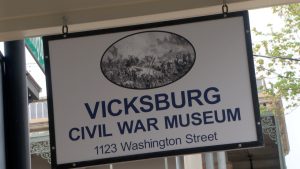 You can see guns, old photos, uniforms, ammunition and some of the old documents that tell the story of the war in Vicksburg. Charles is a great guide through this history and hearing his take on this is an important part of any trip.
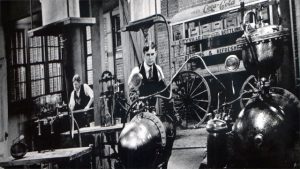 Nearby, you can tour a spot where soda pop history was made. At the Biedenharn Coca-Cola Museum on Washington street, you can visit the place where the first Coca-Cola’s were bottled. The soft drink was first produced in 1866 in Atlanta, but was shipped only as a syrup and sold mostly in soda fountains.
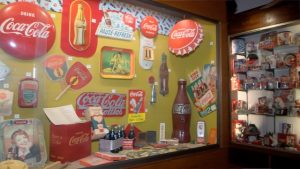 Joe Biedenharn ran a soda fountain in Vicksburg, and in the early 1890’s, pitched the idea of bottling the drink so it could be shipped to smaller rural communities. Here you can see what that early bottling equipment would have looked like and see how the development of the bottles progressed. The rest, as they say, is history.
 And history is on display along the city’s waterfront. Along a stretch once known as Catfish Row. The Vicksburg Riverfront Murals — artwork on cement flood walls — was created by artist Robert Dafford.
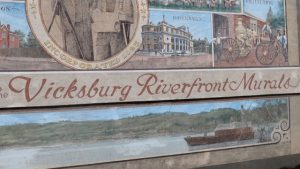 He has done these flood wall paintings all over America. Here he tells the story of Vicksburg, life on the river, and in one images, captures the legend of President Theadore Roosevelt and the birth of the Teddy Bear.
Small Town Americana, Vicksburg, Mississippi

A trip to Vicksburg, Mississippi is a trip back to the days when cities along the Mississippi River thrived because of all the steamboat traffic. The town on bluffs above the river, was actually built by French colonists in 1719. Before that it was long occupied by the Natchez Native Americans. Parked at the bottom of the Mississippi River Delta, it became prime cotton country — and plantations run by slaves created an economic boom for the region. In its day, it was a port clogged with riverboats loaded down with cotton — to be shipped all over the world.
All that cotton money made Vicksburg and nearby Natchez, rich cities – filled with mansions and the culture you would expect to see in New York City. But of course slavery, and the looming Civil War would have a major impact on Vicksburg. Once again being on the river — and up on the bluffs that made it easier to defend — it was bound to become a flash point. In the summer of 1863, Union General Ulysses Grant and Lt. General John Pemberton came to blows. Following a 47 day siege of the city by Grant, the confederacy surrendered — just as the north won a key battle at Gettysburg. The back-to-back losses are considered a turning point in the war.
Another setback hit the city in 1876, when a flood cut off the city from the Mississippi River. The cities economy suffered greatly, and it was a quarter century later that the U.S. Army Corps of Engineers restored access to the river by building the Yazoo Diversion Canal in 1903. You can learn much about the Corps efforts on the rivers at the Lower Mississippi River Museum. The 1870’s also saw a time of increased racial tensions, leading up to an event known as the Vicksburg massacre, and eventually President Grant was forced to send in federal troops.
All this history has made Vicksburg a fascinating place to visit for tourists. Of course many come to see the civil war battlefields. Organized or self guided tours tell the story well. A walk among the guns and monuments is a sobering experience, and a little silence on these walks can play tricks on your minds, you can almost hear the noises of war drifting on the wind. The National Park Service manages the Vicksburg National Military Park, including the USS Cairo.
It is an armor plated gunboat that was launched in 1862, but was sunk in action several miles north of Vicksburg, sinking in the Yazoo River. A century later, it was recovered from the river and over the years the National Park Service has restored it and you can tour the remains of the boat.
Another must visit stop is the Vicksburg Civil War Museum. It was started by Charles Pendleton, a local businessman, and collector of historic objects. You can see guns, old photos, uniforms, ammunition and some of the old documents that tell the story of the war in Vicksburg. Charles is a great guide through this history and hearing his take on this is an important part of any trip.
Nearby, you can tour a spot where soda pop history was made. At the Biedenharn Coca-Cola Museum on Washington street, you can visit the place where the first Coca-Cola’s were bottled. The soft drink was first produced in 1866 in Atlanta, but was shipped only as a syrup and sold mostly in soda fountains.
Joe Biedenharn ran a soda fountain in Vicksburg, and in the early 1890’s, pitched the idea of bottling the drink so it could be shipped to smaller rural communities. Here you can see what that early bottling equipment would have looked like and see how the development of the bottles progressed. The rest, as they say, is history.
And history is on display along the city’s waterfront. Along a stretch once known as Catfish Row. The Vicksburg Riverfront Murals — artwork on cement flood walls — was created by artist Robert Dafford.
He has done these flood wall paintings all over America. Here he tells the story of Vicksburg, life on the river, and in one images, captures the legend of President Theadore Roosevelt and the birth of the Teddy Bear.

Subscribe to Watch it All
Subscribe to Saving Americana and get access to all of our Big Stories and other Episodes too!

In “Small Town Americana”, we visit off-the-interstate places that seem unchanged.


Showing 1-3 of 33 results
0 Comments