
Small Town Americana: Natchez, Mississippi
Long before freeways and paved roads, the highways of America were on water. People and cargo were moved on the canals and big rivers. And as the steamboats moved up and down the Mississippi, small towns and big cities sprang up. From New Orleans to St. Louis, past Minneapolis, riverboats by the thousands moved north and south. And all up and down this 23 hundred mile long “highway,” smaller but important cities and towns were born. In Western Mississippi, one of the most interesting was built up on bluffs above the river, and the money poured in.
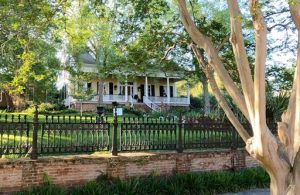
With no railroads at the time, Natchez was spared much of the Civil War destruction seen in other cities and towns along the river. So for history lovers, it’s a fascinating place to visit and see the old homes and mansions virtually untouched. Here you find a remarkable collection of Antebellum period homes. Antebellum is a Latin term that means “pre-war.” 
One of the best ways to see all the old homes is by horse drawn carriage. Bob Clem and his four legged partner Clyde work with Southern Carriage Tours. They wander the streets of the old city and tell the story of Natchez and it’s historic homes. Says Bob: “people just love the slow ride .. for the slow relaxing ride that it is.”
 Author Mark Twain mentions Natchez several times in his book Tom Sawyer, including attending his own funeral in one of the city’s churches — the community not realizing he and his friends Joe Harper and Huck Finn are presumed lost and drowned on the river near town. The three hatch a plan to sit in the back of the church to listen to the service. The legend goes, it took place in the First Presbyterian Church on State Street. Even before he began writing, Samuel Clemens (Twain) visited the town frequently as a river boat captain.
The town became rich on cotton, but it came on the backs of thousands of slaves that worked the fields and businesses of the city.  Bobby Dennis runs the African American Culture Center and works to preserve the story of the slave and free people of color that built Natchez and the cotton industry.
He is hunting through records to document slaves sold and traded at the “Forks of the Road.” Here a tiny monument — cement with chains and shackles marks the spot.
Small Town Americana: Natchez, Mississippi

Long before freeways and paved roads, the highways of America were on water. People and cargo were moved on the canals and big rivers. And as the steamboats moved up and down the Mississippi, small towns and big cities sprang up. From New Orleans to St. Louis, past Minneapolis, riverboats by the thousands moved north and south. And all up and down this 23 hundred mile long “highway,” smaller but important cities and towns were born. In Western Mississippi, one of the most interesting was built up on bluffs above the river, and the money poured in.
With no railroads at the time, Natchez was spared much of the Civil War destruction seen in other cities and towns along the river. So for history lovers, it’s a fascinating place to visit and see the old homes and mansions virtually untouched. Here you find a remarkable collection of Antebellum period homes. Antebellum is a Latin term that means “pre-war.”
One of the best ways to see all the old homes is by horse drawn carriage. Bob Clem and his four legged partner Clyde work with Southern Carriage Tours. They wander the streets of the old city and tell the story of Natchez and it’s historic homes. Says Bob: “people just love the slow ride .. for the slow relaxing ride that it is.”
Author Mark Twain mentions Natchez several times in his book Tom Sawyer, including attending his own funeral in one of the city’s churches — the community not realizing he and his friends Joe Harper and Huck Finn are presumed lost and drowned on the river near town. The three hatch a plan to sit in the back of the church to listen to the service. The legend goes, it took place in the First Presbyterian Church on State Street. Even before he began writing, Samuel Clemens (Twain) visited the town frequently as a river boat captain.
The town became rich on cotton, but it came on the backs of thousands of slaves that worked the fields and businesses of the city. Bobby Dennis runs the African American Culture Center and works to preserve the story of the slave and free people of color that built Natchez and the cotton industry.
He is hunting through records to document slaves sold and traded at the “Forks of the Road.” Here a tiny monument — cement with chains and shackles marks the spot.

Subscribe to Watch it All
Subscribe to Saving Americana and get access to all of our Big Stories and other Episodes too!

In “Small Town Americana”, we visit off-the-interstate places that seem unchanged.


Showing 1-3 of 33 results
0 Comments