
The Conestoga Wagon
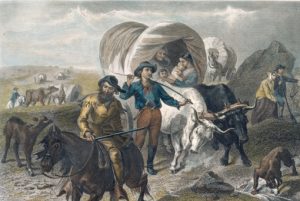
In the early days of America — long before independence — things ran on horse power. Before planes, trucks, trains and even the canals — horses, mules and oxen were the key to almost everything. They powered the farms — and moved goods in and out of the growing cities of the colonies. By the early 17 hundreds, large wagons were driven by teams of animals — on primitive roads. There are all sorts of wagons, but in the farmland of central Pennsylvania, was born the biggest of them all — the Conestoga Wagon. It was pulled by six to eight horses or a dozen oxen— and could carry tons of freight. The first mention of the Conestoga was around 1717 — named after the Conestoga River Valley — which got it’s name from a small tribe of native Americans.
The Conestoga wagon became a key link to pioneers moving west into the Appalachian Valley, and played a large role in the revolutionary war. But unlike some Hollywood lore, they were not a part of the migration west on the Oregon and California Trails. But the legend and image of the Conestoga still lingers. When you mention “Covered Wagons” the Conestoga frequently comes to mind — but they long ago were replaced by the newer technology. Yet you can still find some of the old wagons.
 We traveled to the Conestoga Area Historical Society in Conestoga, Pennsylvania and talked to Ken Hoak, to learn about this historic wagon. The museum has several of the old wagons.

Indeed all over the region we met people keeping this history alive. Arthur Reist has an outstanding collection of the wagons that have been in his family for decades — and one of the wagons can trace it’s roots to George Washington in Valley Forge — during the Revolutionary War.
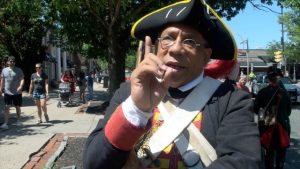 In Haddenfield, New Jersey, we met Noah Lewis — who had preserved the tradition of the old teamsters that ran the wagons — before, during and after the war. In lectures and demonstrations, he tells the story of Edward “Ned” Hector. Born in 1743 — he was a hero of the Battle of Brandywine.
The Conestoga Wagon
In the early days of America — long before independence — things ran on horse power. Before planes, trucks, trains and even the canals — horses, mules and oxen were the key to almost everything. They powered the farms — and moved goods in and out of the growing cities of the colonies. By the early 17 hundreds, large wagons were driven by teams of animals — on primitive roads. There are all sorts of wagons, but in the farmland of central Pennsylvania, was born the biggest of them all — the Conestoga Wagon. It was pulled by six to eight horses or a dozen oxen— and could carry tons of freight. The first mention of the Conestoga was around 1717 — named after the Conestoga River Valley — which got it’s name from a small tribe of native Americans.
The Conestoga wagon became a key link to pioneers moving west into the Appalachian Valley, and played a large role in the revolutionary war. But unlike some Hollywood lore, they were not a part of the migration west on the Oregon and California Trails. But the legend and image of the Conestoga still lingers. When you mention “Covered Wagons” the Conestoga frequently comes to mind — but they long ago were replaced by the newer technology. Yet you can still find some of the old wagons.
We traveled to the Conestoga Area Historical Society in Conestoga, Pennsylvania and talked to Ken Hoak, to learn about this historic wagon. The museum has several of the old wagons.
Indeed all over the region we met people keeping this history alive. Arthur Reist has an outstanding collection of the wagons that have been in his family for decades — and one of the wagons can trace it’s roots to George Washington in Valley Forge — during the Revolutionary War.
In Haddenfield, New Jersey, we met Noah Lewis — who had preserved the tradition of the old teamsters that ran the wagons — before, during and after the war. In lectures and demonstrations, he tells the story of Edward “Ned” Hector. Born in 1743 — he was a hero of the Battle of Brandywine.

Subscribe to Watch it All
Subscribe to Saving Americana and get access to all of our Big Stories and other Episodes too!

“Keepers of Americana” are the folks preserving history in museums and non-profits.


Showing 1-3 of 29 results
0 Comments